
Why Extruded Aluminum Enclosures Are Ideal for Outdoor Electronics
More Posts
Contact Us

Jindee
CNC Machining Manufacture
Join our Social Media Get Dynamic


— A CNC Engineer’s Personal Account
Outdoor electronic devices operate in extremely harsh environments. High temperatures, rain, UV radiation, dust, vibration, salt spray—sometimes all of these can be tested within a week. If the casing is damaged, all internal components will fail. Having worked for years on CNC machining and extrusion housings for field equipment, I’ve witnessed firsthand why extruded aluminum profiles remain one of the best choices for building reliable outdoor electronic device housings.
This isn’t just theoretical; it’s based on the material’s performance in real-world applications, such as how heat is transferred within metals and the actual performance of seals after several seasons of outdoor exposure.
Corrosion is usually the first failure point in outdoor installations. Steel rusts. Painted surfaces chip. Fasteners seize. Once corrosion starts, sealing performance drops quickly.
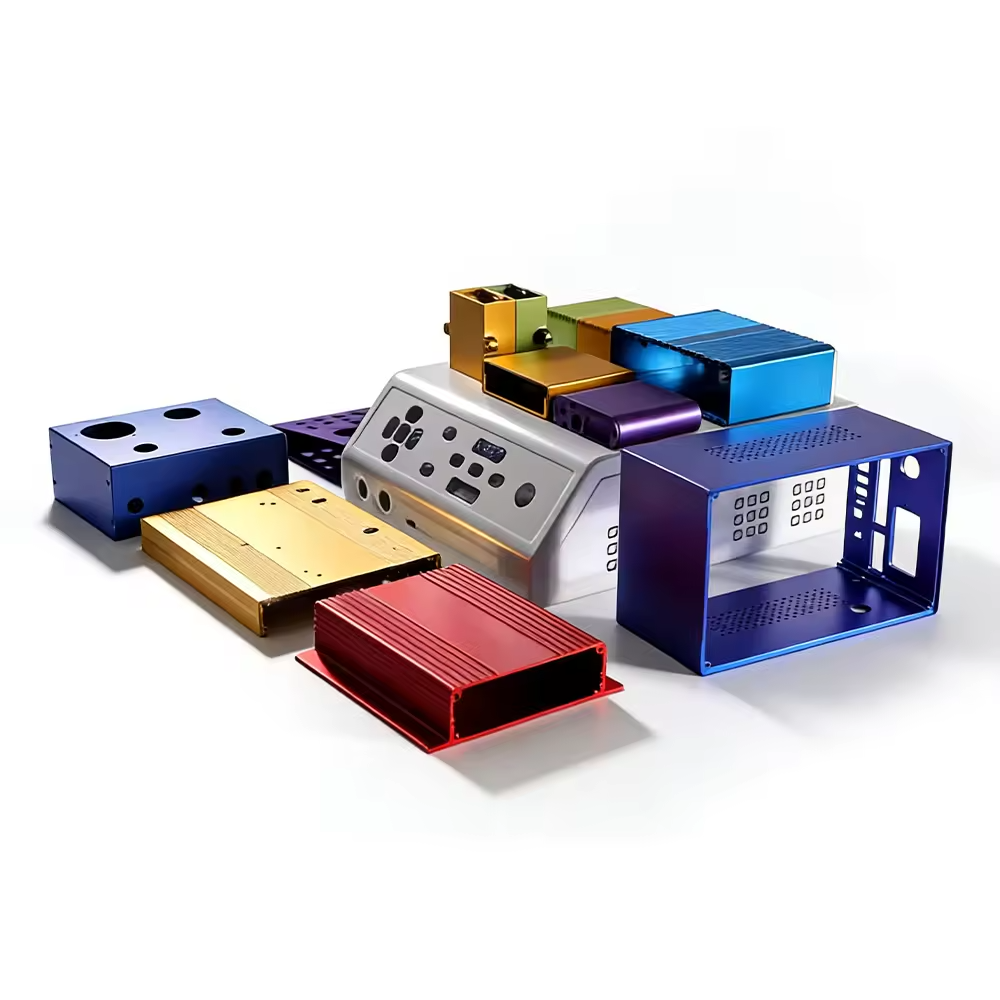
An aluminum enclosure for outdoor use performs differently because aluminum naturally forms a thin oxide layer when exposed to air. This oxide layer protects the underlying metal from further corrosion. When we add anodizing or powder coating, that protection increases significantly.
In coastal or high-humidity environments, I typically recommend:
Marine-grade aluminum alloys (such as 6061 or 6063 for extrusions)
Hard anodizing for abrasion resistance
Stainless steel hardware to avoid galvanic corrosion
Proper isolation between dissimilar metals
Compared with plastic enclosures, aluminum doesn’t degrade under UV exposure. Compared with untreated steel, it doesn’t rely entirely on surface paint for survival. Over time, that difference shows up in lower maintenance costs and fewer field replacements.


Superior Heat Dissipation in Real Conditions
Heat management is often underestimated when designing an outdoor electronics enclosure. Ambient temperatures can reach 40°C or higher, and internal electronics generate their own heat. Without proper dissipation, internal temperatures climb quickly.
Aluminum has thermal conductivity around 200 W/m·K, far higher than plastic. This means the enclosure itself becomes part of the thermal management system.
Extruded aluminum profiles allow us to integrate:
External cooling fins directly into the housing
Thick base plates for better heat spreading
Direct mounting surfaces for power components
Tight tolerance interfaces for thermal pads
In many outdoor controllers and communication devices, we eliminate active cooling entirely. No fan means no moving parts, no dust intake, and fewer failure points. The enclosure becomes a passive heat sink.
From a CNC engineer’s perspective, extruded profiles also reduce machining time because the fin structure is already formed during extrusion. We only machine critical interfaces and end plates.
Mechanical Strength Without Excess Weight
Outdoor equipment faces mechanical stress: wind load, vibration from vehicles, accidental impacts during maintenance. The enclosure must resist deformation without becoming excessively heavy.
Aluminum offers an excellent strength-to-weight ratio. Extruded profiles can be designed with internal ribs, thicker corners, and reinforced mounting slots without dramatically increasing weight.
In practical applications, this provides:
Structural rigidity for wall or pole mounting
Resistance to bending under cable tension
Better performance in high-vibration environments
Easier installation due to lower overall mass
Compared with cast housings, extruded aluminum provides consistent grain structure along the length of the profile. Compared with plastic, it maintains dimensional stability across temperature swings.
For field-installed devices like traffic monitoring systems or outdoor networking nodes, this balance between strength and weight makes a measurable difference.


Reliable IP Ratings When Designed Correctly
An aluminum enclosure for outdoor use is only as good as its sealing system. IP ratings such as IP65, IP66, or IP67 depend not just on material, but on machining accuracy and gasket design.
With extruded aluminum enclosures, we typically machine precision grooves for silicone or EPDM gaskets. Flat mating surfaces are easier to control in CNC processes compared with injection-molded plastics.
Key design considerations include:
Continuous gasket compression
Even screw distribution
Controlled surface flatness
Proper cable gland selection
Extruded housings often use removable end caps. When properly machined and sealed, this structure achieves high IP ratings while maintaining serviceability.
IP65 protects against dust and low-pressure water jets. IP67 adds temporary immersion protection. For outdoor control systems, these ratings are common targets.
It’s important to remember that IP performance depends on assembly discipline as much as design. Correct torque, clean gasket surfaces, and proper cable sealing matter just as much as the enclosure material.
Typical Applications in the Field
Over the years, extruded aluminum has proven itself across a wide range of outdoor applications.
In LED lighting systems, drivers generate heat continuously. Aluminum housings help dissipate that heat while resisting rain and UV exposure.
Telecommunication equipment installed on towers or rooftops requires durable, weather-resistant protection with good EMI shielding. Aluminum naturally provides electromagnetic shielding advantages over plastic.
Solar inverters and energy monitoring systems operate in open environments. Thermal performance and corrosion resistance are critical in these installations.
EV charging infrastructure, traffic control systems, agricultural monitoring devices, and industrial IoT gateways all benefit from robust outdoor electronics enclosure solutions based on extruded aluminum.
In each case, the enclosure does more than protect; it contributes to thermal management, structural integrity, and long-term reliability.
Manufacturing Advantages of Extrusion + CNC
From a production standpoint, extruded aluminum offers flexibility that casting or full CNC-from-solid blocks cannot match economically.
The extrusion process creates a continuous profile. This means:
Lower material waste
Repeatable cross-sections
Faster production scaling
Cost efficiency for medium to high volumes
CNC machining is then applied only where precision is required—connector openings, threaded holes, mounting features. This hybrid approach balances cost and performance.
If customization is needed, modifying end caps or machining patterns is much faster than redesigning an entire mold, which would be required for plastic injection molding.
For companies developing industrial outdoor products, this adaptability reduces time-to-market and tooling risk.
Why It Continues to Be the Practical Choice
When evaluating enclosure materials for outdoor deployment, the conversation often starts with cost per unit. But in field environments, lifecycle cost matters more.
An extruded aluminum enclosure for outdoor use offers:
Natural corrosion resistance
Excellent heat dissipation
High mechanical strength
Reliable IP sealing capability
EMI shielding
Scalable manufacturing
In my experience, failures in outdoor systems rarely come from overly strong enclosures. They come from poor sealing, insufficient thermal management, or material degradation over time. Aluminum addresses these risks directly.
For engineers designing equipment that must operate outdoors year-round, extruded aluminum remains one of the most balanced and dependable solutions available.